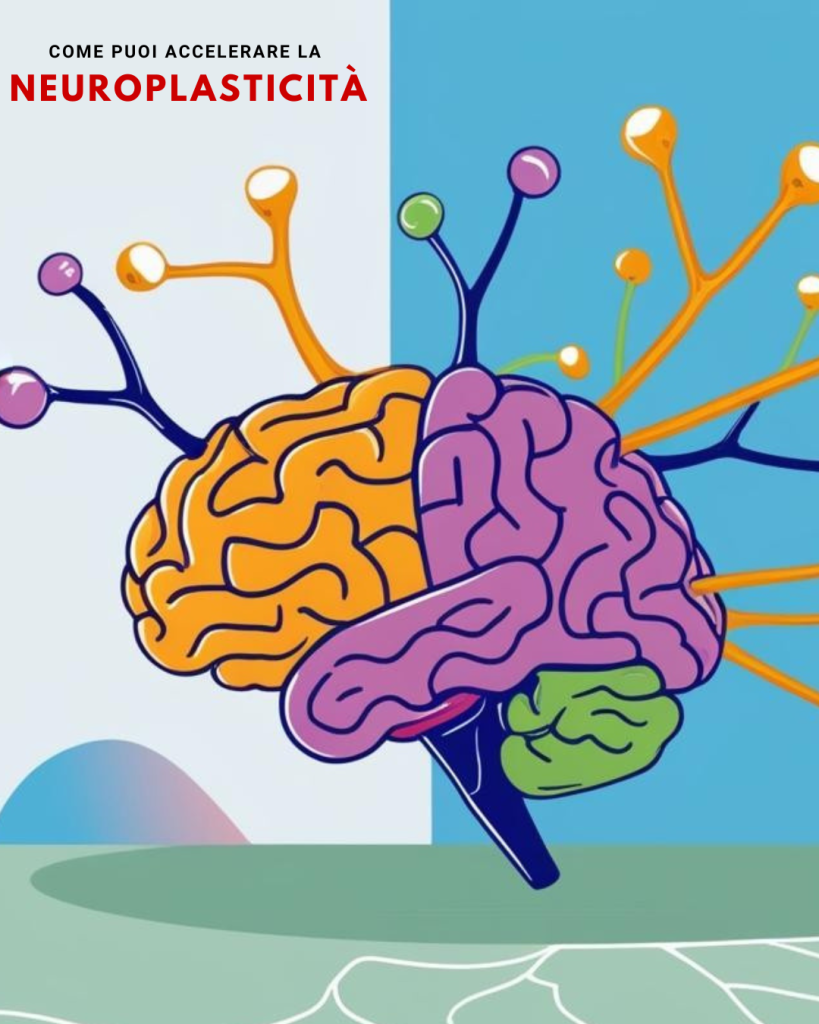

The nervous system, which includes the brain, the spinal cord, and all the connections to the body’s organs, is the foundation of every experience, emotion, and behavior we have. Fortunately, unlike other species, we human beings have the ability to modify our nervous system through specific, conscious actions. This ability is called neuroplasticity, and scientific research has revealed that movement, balance, and learning, in particular, play a fundamental role in shaping our brain.
The Science of Neuroplasticity: How It Works
Neuroplasticity refers to the brain’s ability to reorganize its neural connections in response to new experiences and learning. This means that our brain is not a static entity but rather a dynamic system capable of adapting and changing over the course of life. A key experiment conducted by Eric Newton’s laboratory demonstrated how the nervous system adapts even to perceptual changes. In this study, subjects wore prismatic glasses that distorted their visual field, shifting the apparent position of objects. Initially, the subjects had difficulty reaching for the objects, but within a day or two, the young participants were able to readjust their motor behavior to reach the correct position. This experiment highlights the brain’s ability to reorganize neural maps in response to new sensory and motor experiences.
Errors and Learning: The Engine of Neuroplasticity
A fundamental aspect of neuroplasticity is the role of errors. When we make a mistake, our nervous system receives a signal indicating the need for change. In practice, errors trigger the release of neurotransmitters and neural modulators, such as epinephrine and acetylcholine, which prepare the brain to modify its neural circuits. This process, initiated by the frustration caused by the error, creates an opportunity to focus on the margin of error—the gap between what is being done and what one would like to do. Subsequently, when we begin to correct the error, dopamine is released, facilitating the plastic changes.
The Importance of a “Beginner’s Approach”
Often, learning is accompanied by the frustration that arises from making mistakes. However, frustration is actually a positive signal, as it indicates that the nervous system is preparing for change. For this reason, adopting a beginner’s attitude—where one expects to make mistakes—is essential for learning. This means that one should not be discouraged by frustration but rather use it as a stimulus to focus on correcting the error.
How to Accelerate Neuroplasticity in Adults
Neuroplasticity is more evident in the young, but this does not mean that adults cannot benefit from this process. In fact, the adult nervous system is capable of making significant changes, provided that certain key principles are followed:
- Incremental Learning: As adults, it is more effective to divide learning into small phases, focusing on limited amounts of information during each learning period. Avoid trying to learn too much at once, as this hinders the neuroplastic process.
- Targeted Learning Sessions: It is advisable to engage in brief and intense learning sessions, aiming to reach a point of frustration, and then continue with further attempts (10–100).
- Small Errors, Big Results: Instead of making large mistakes, it is useful to commit small errors repeatedly and adjust performance until the desired result is achieved.
- Meaningful Incentives: The speed and extent of neuroplasticity largely depend on how much we desire or need that change. A strong incentive, such as the necessity of finding food for survival, can trigger plasticity comparable to that seen in the young.
Practical Applications of Neuroplasticity
The understanding of neuroplasticity can be applied to various areas of daily life:
- Learning New Skills: Whether it is learning to play a musical instrument, writing code, or practicing a sport, the right approach is to accept mistakes as an integral part of the learning process. Break down the skill to be acquired into small parts, work on each part separately, and engage in periods of focused practice.
- Overcoming Difficulties: When faced with challenges, neuroplasticity offers the possibility to overcome obstacles and readjust our behavior. Instead of giving up in the face of difficulty, it is important to persist, accept errors as part of the journey, and use frustration to focus on making corrections.
- Improving Mental and Physical Health: Neuroplasticity can be harnessed to promote positive changes in both physical and mental well-being. For example, engaging in regular physical activity, meditating, or learning new skills can help improve mood, reduce stress, and increase resilience.
Neuroplasticity is an extraordinary ability of our brain that allows us to learn, adapt, and change throughout our lives. Understanding the mechanisms underlying neuroplasticity and the strategies to optimize it can help us reach our full potential and live a more fulfilling life. Let us remember not to fear errors, but to embrace them as opportunities for growth and change.